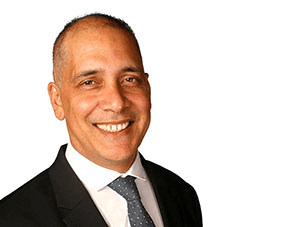
Pete Fry
Pete Fry is running for Mayor of Vancouver with Green Party of Vancouver. Their campaign website presents a campaign focused on Housing. The published positions supports simplify and speed up approvals for new housing; opposes New housing should only be approved where it fits the existing scale and character of the neighbourhood.
Verified positions
Positions supported by public campaign material or another attributable source. These enter the questionnaire comparison without an inference label.
Supports streamlined permitting for low-rise apartments, row homes, townhomes, infill and wood-frame construction across Vancouver.
Vancouver doesn't need one kind of housing everywhere. We need more ways for people to find a home that fits their life and their budget.
At the September 8 mayoral debate, Fry was reported as firmly supporting reversal of the pause on new supportive-housing units.
...as the City struggles with Sim's reckless tax cuts, disrupting city services and leading to widespread fee increases, people are calling for change.
Fry told The Tyee that he supports police, but sees them as just one element for improving public safety.
Qualification: Supports police while rejecting policing-only approaches to public safety.
Supports retaining the elected Park Board and is running a Green Park Board slate.
Yes. I would review current funding levels for Indigenous organizations...
Yes I support the developments, and at council I voted in favour of these projects and their subsequent policy amendments.
AI-inferred positions
These are transparent estimates drawn from related public material, not statements the candidate made in answer to these exact questions. Each estimate is flagged with its source, confidence, and model reasoning, and is used only where no verified position is available.
Criticises tax cuts that the campaign says disrupt City services and lead to widespread fee increases.
Why the model reads it this way: Fry's criticism of tax restraint that constrains services points away from a general inflation cap, though he has not proposed a specific alternative ceiling.
Fry's campaign identifies climate action and transportation alternatives as ongoing priorities.
Why the model reads it this way: Those priorities make support for the UBC SkyTrain extension likely, although the current campaign material reviewed does not contain a specific commitment.
Fry's transportation work emphasizes accessible transit and new low-emission mobility options.
Why the model reads it this way: Those priorities weakly point toward managing rather than broadly reducing parking prices, but the campaign does not address the meters named in the question.
Fry's campaign identifies climate action, natural-habitat protection and resilient public spaces as core priorities.
Why the model reads it this way: Those established Green priorities strongly indicate support for strengthening the City's tree-canopy strategy.
Would modernise City procurement while supporting local hiring and local suppliers.
Why the model reads it this way: Fry's support for modernized City processes, streamlined housing permits and local enterprise indicates support for simpler business-facing rules while retaining social and environmental requirements.
The Vancouver Greens describe parks and recreation services as essential public services that must be supported as the city grows.
Why the model reads it this way: Treating parks and recreation as essential services indicates support for increased capital investment, although Fry has not published a specific total.
The Green Park Board slate prioritizes accessible public spaces and increasing public washrooms and water fountains.
Why the model reads it this way: The party slate running with Fry expressly supports increasing public washrooms, providing strong party-level evidence for support.